Seasonal perimeter pest defense creates a protective non-volatile barrier around the immediate envelope of a structure, eliminating the need to disperse broad-spectrum chemical sprays inside family living spaces. In…
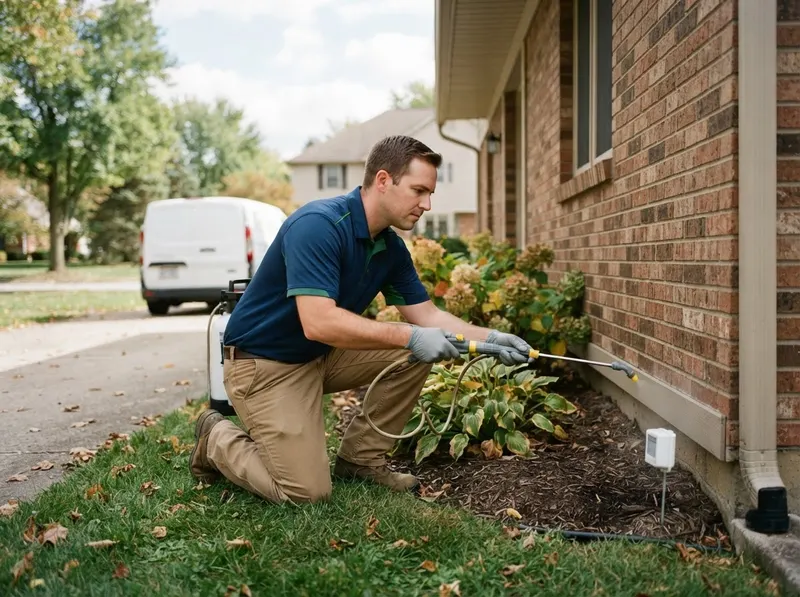
Seasonal perimeter pest defense creates a protective non-volatile barrier around the immediate envelope of a structure, eliminating the need to disperse broad-spectrum chemical sprays inside family living spaces. In neighborhoods like Point Place and Birmingham, close proximity to the Maumee River and Lake Erie basin creates heavy seasonal surges of midges, moisture-seeking pavement ants, and American cockroaches seeking refuge in foundation expansion joints. Properties near heavily wooded corridors, such as Ottawa Park or adjacent parcels along Ottawa Hills, face autumn migrations of field mice and boxelder bugs seeking wall voids for overwintering. Exterior applications concentrate microencapsulated barrier formulations alongside mechanical sealing along sill plates, basement window wells, and low-clearance siding joints.
Selecting external seasonal barriers over reactive indoor baiting resolves structural vulnerabilities before pests trigger contaminated food pantries, sleepless nights from drywall scratching, and personal exposure to sanitation risks. The decision-fit trade-off balances application zone against pest maturity: a perimeter perimeter defense halts perimeter-breaching foragers and autumn invaders, but active interior infestations, such as established German cockroaches nested behind kitchen cabinets or deep structural drywood termites, require targeted internal mechanical evacuation alongside the perimeter seal. In historic structures throughout the Old West End and the Warehouse District, high stone-and-mortar foundations frequently reveal mortar decay; here, mechanical weep-hole covers and silicone-based sealant are installed across basement utilities to prevent rodent ingress through half-inch gaps.
Applying targeted seasonal applications to West Toledo, Five Points, and Southside homes follows four structured seasonal intervals: spring ant and crawling-insect interception, summer moisture and spider suppression, autumn perimeter fortification against rodent seek-behavior, and late-winter inspection of foundation freeze-thaw cracks. Every treatment establishes a continuous 6-foot treated zone (3 feet upward onto the masonry foundation and 3 feet outward onto adjacent soil or hardscape). By managing pest vectors strictly from the exterior, living spaces remain chemically neutral, family-safe, and free from visceral pest disruption.
Every job gets a firm, written price after a free on-site visit.
Tell us about your seasonal perimeter pest defense job in Toledo and we'll send a clear, written quote, usually the same day.
 TerraSafe Pest Co.